One page, every week.
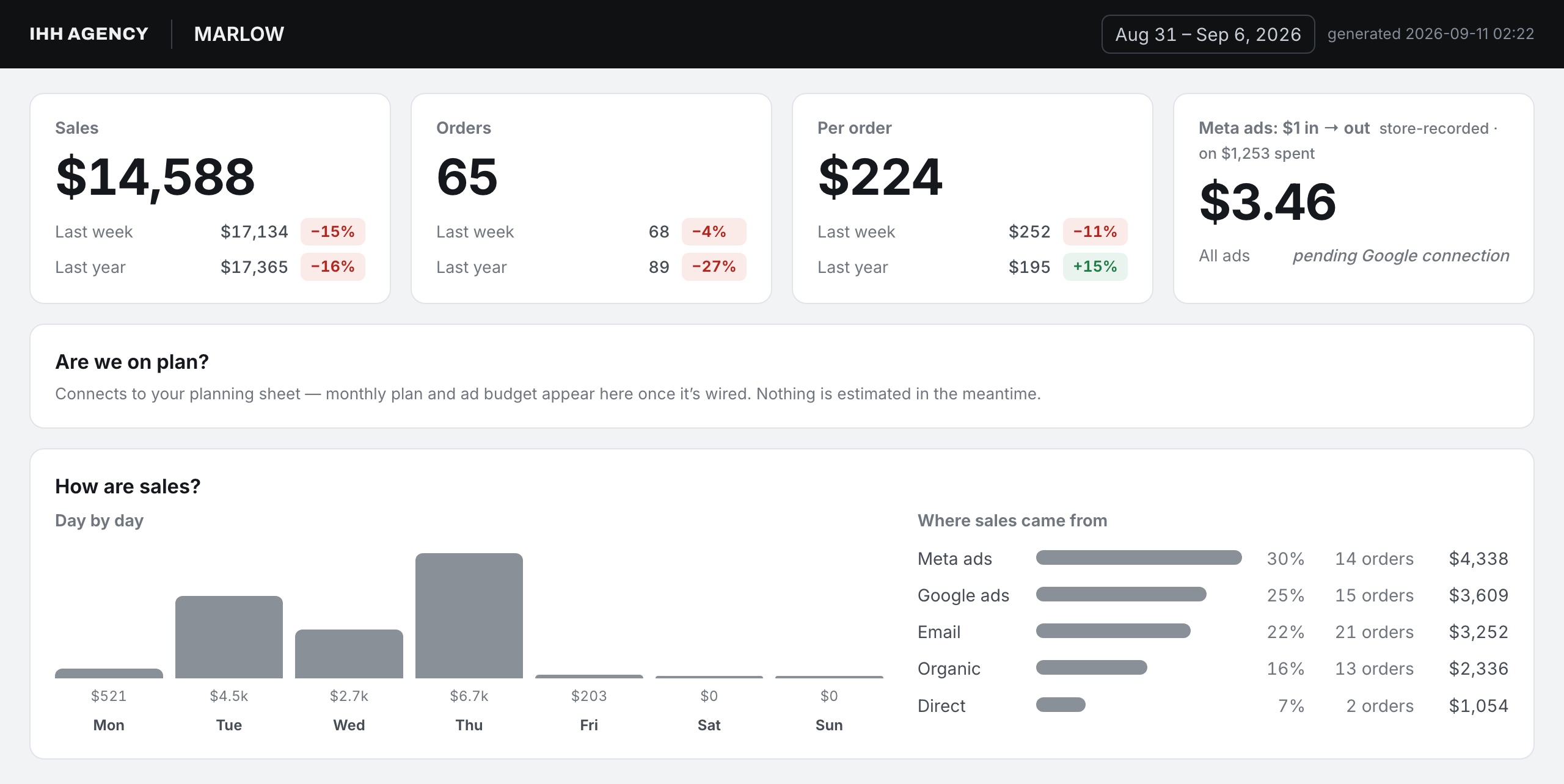
Sales, orders, and average order against last week and last year. The fourth card is the one that matters: dollars out per dollar in, on the store’s own count — and it says plainly when a platform isn’t connected yet.
We run Meta and Google Ads for Shopify brands, and we report on them in one page a week — every number traceable, the platform’s claim next to what the store actually recorded.
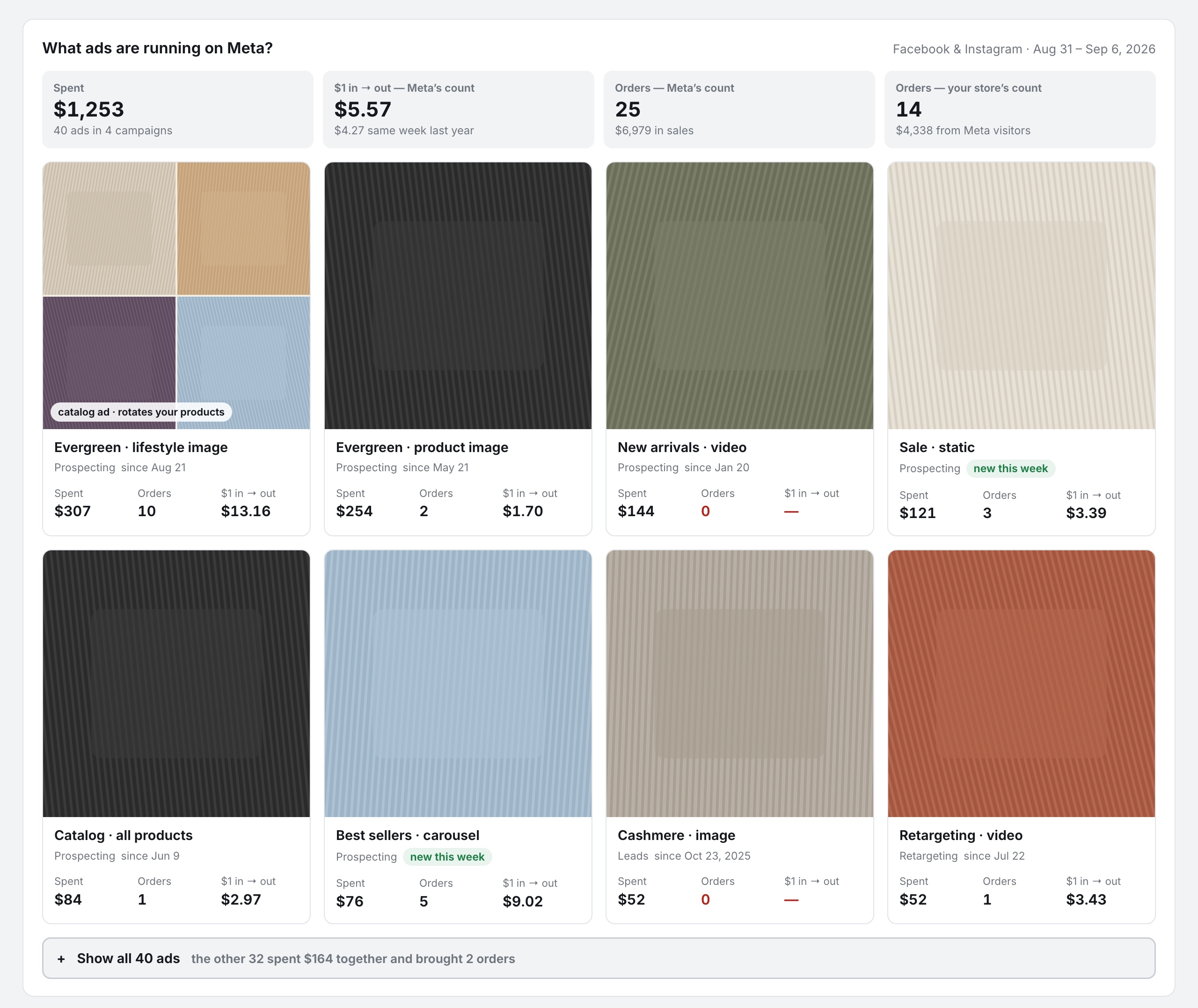
Most ad reporting repeats the platform’s number. Meta says it drove 25 orders; the report says 25. The store, meanwhile, recorded 14 from Meta visitors. Both numbers are true in their own way, and a brand owner deserves to see both.
That’s the whole idea. A system reads the brand’s own accounts every night — Shopify, Meta, Klaviyo, Google once access is granted — and renders one page. A person reads that page, decides, and makes the change by hand. Nothing in a client account changes on its own.
Below is that page for a real client: a week in September 2026 from a knitwear brand, shown as “Marlow.” Product, ad, and email names are replaced and every dollar figure is scaled by one factor; every proportion — every ratio, every gap between a platform’s count and the store’s — is exactly as it was.
Sales, orders, and average order against last week and last year. The fourth card is the one that matters: dollars out per dollar in, on the store’s own count — and it says plainly when a platform isn’t connected yet.
The creative, how long it has run, spend, orders, and dollars out per dollar in. Meta’s count and the store’s count sit in the same row of tiles. Zero-order ads are red; nobody has to go looking for them.
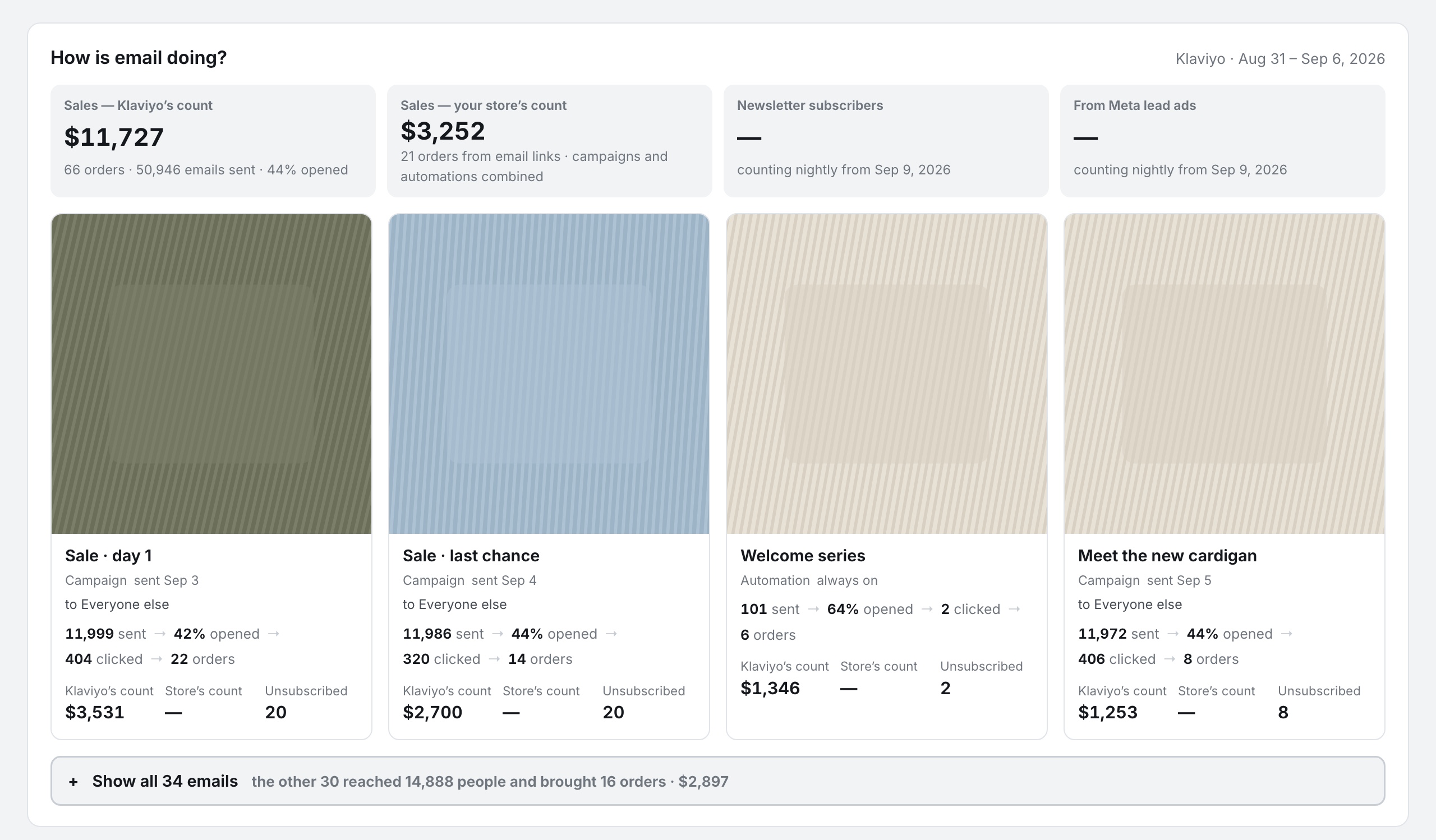
Who each email went to, how many opened and clicked, what it sold — by Klaviyo’s count and by the store’s. Automations sit next to campaigns because the welcome series out-earns most sends.
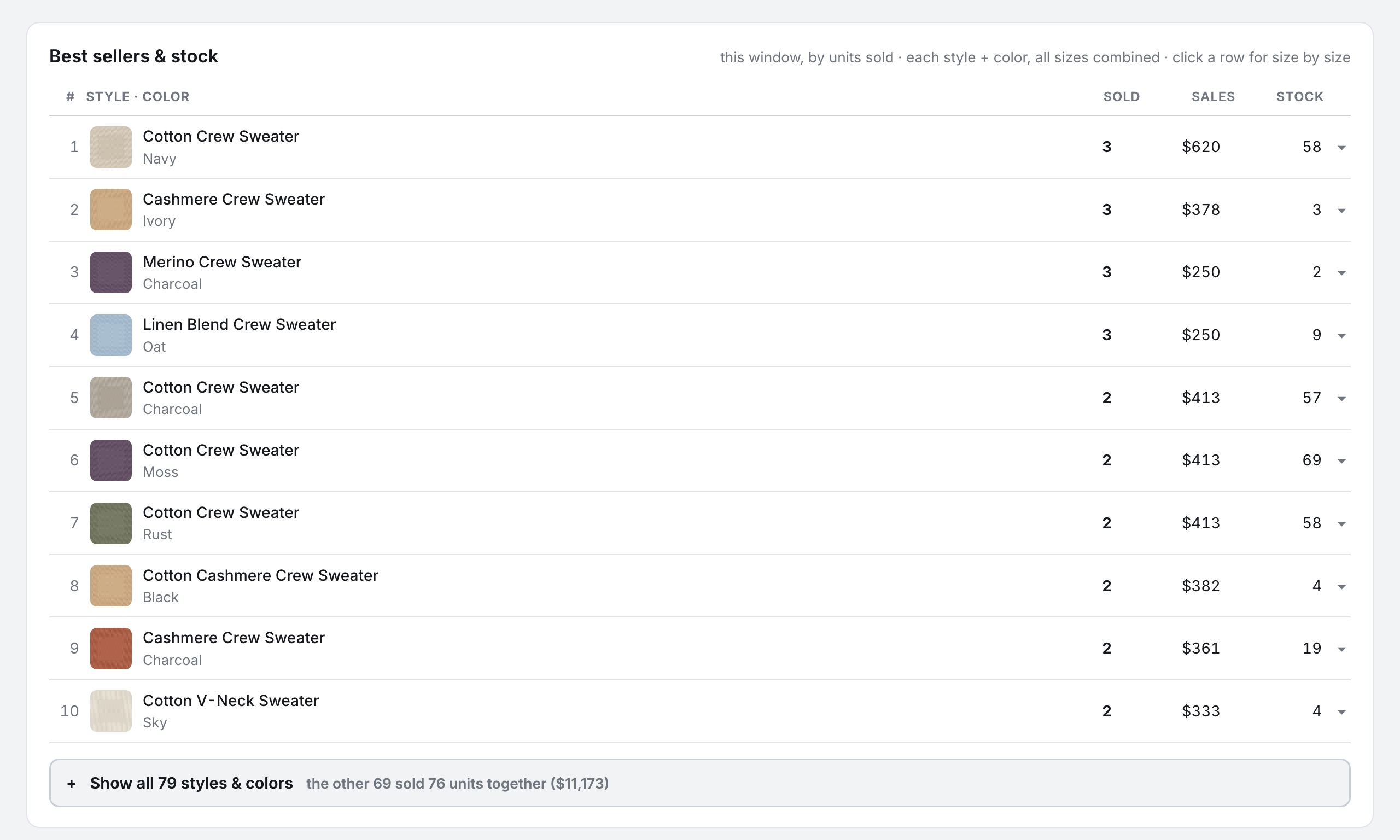
Best sellers by style and color with stock on hand, size by size. Ads and inventory on one page, so a campaign never keeps selling something the warehouse ran out of.
Campaign builds, budgets and bids, structured A/B tests across Meta and Google. Changes are planned, previewed, and logged — never improvised.
One page a week: revenue, spend, return, what sold, what each email did. Every number from the platform that produced it or the store’s own orders, never a blend.
Best sellers with stock on hand, next to the ads that sell them — because a winning ad for a sold-out product is a loss.
How it works. Every night, the page refreshes itself from your own accounts — your store, your Meta ads, your email platform, and Google once it’s connected. You don’t send us anything and nothing gets copied by hand.
The reporting can only look. It can’t change a budget, pause an ad, or touch a campaign — that isn’t a rule we follow, it’s something the software physically can’t do, and we test that it stays true. When something should change, a person changes it, and the change shows up on next week’s page.
Your accounts stay yours. We work from a reporting login you grant, and you can switch it off whenever you like.
Reporting-level access is all it takes to see your own account this way. No changes to your accounts, no migration.
[email protected]